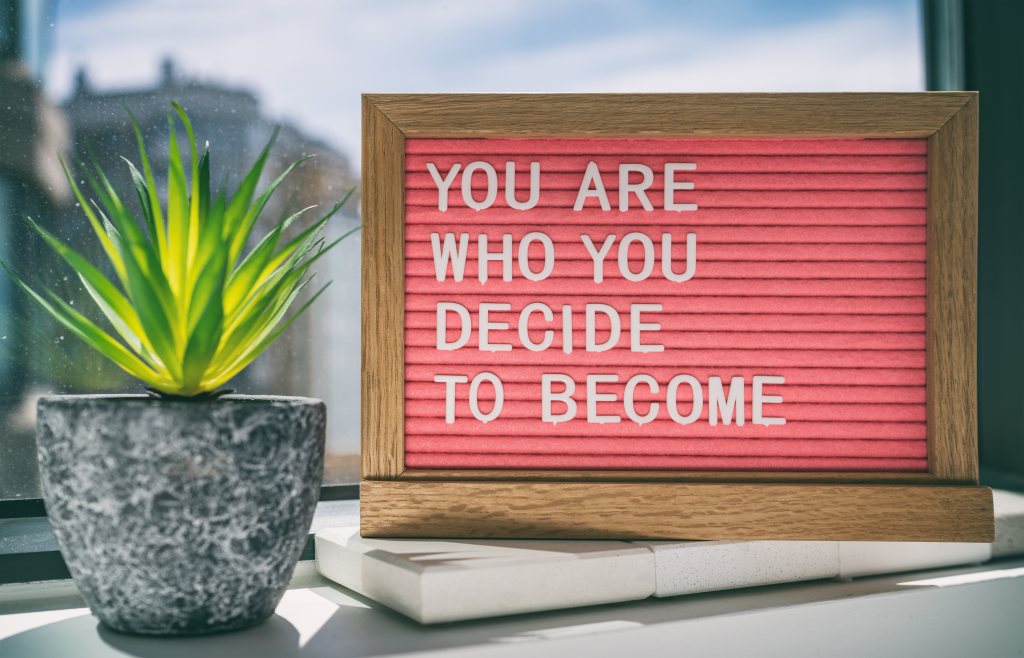
What can Mindfulness help you become?
An explosion of research over the past twenty years has led to thousands of peer reviewed articles citing the benefits of Mindfulness. Studies reveal the transformative power of awareness, helping to improve emotional regulation and change activity of our neural circuits in the brain and body.
‘Mindfulness arises when we learn to pay attention, on purpose, in the present moment, without judgement, to things as they actually are. It is the door through which you can enter into ‘Being Mode’. We start to see the world as it is, not how we expect it to be, how we want it to be or what we fear it might become.’ Mark Williams
Here are 8 ways Mindfulness can help you transform:
- Become Curious – investigate your default mode of operation, how do you live your life each day? Is autopilot running your busy mind? Are you aware of what is happening in each moment or are you in a constant state of doing?
- Become Aware – bring awareness to your present moment experiences. Understanding your thoughts, emotions and physical sensations helps you to really get to know yourself. How you are feeling, how you behave and how you react. Becoming aware of our habitual tendencies that take over when busy. Awareness helps us to step out of autopilot mode when parts of our day drift by as our mind is constantly doing. Importantly, if you don’t know something is happening you cannot change it.
- Become Intentional – with greater awareness comes choice, this informs how you act. You can consciously engage with experience with intention rather than habit. You can step into being mode, relate directly to experience and make conscious choice. You can learn to read messages from your body, notice sensations, and use them as an emotional radar to help shape your reactions. There is a space between stimulus and response, this offers choice.
- Become Skilful – disengage from mental time travel and see thoughts as mental events rather than facts. Learn to look at your thoughts rather than from them. Check the validity of thoughts rather than ruminating about the past or worrying about the future. By taking space, pausing and skilfully working with thought, you are more present and more likely to be happy
- Become Accepting – be with each moment as is it, acknowledge the reality no matter if we like it or not. By allowing and letting be, you take an open stance and respond with curiosity, kindness and appreciation. Turn on the approach pathways in the brain and switch off aversion. This befriending is a new way to work with difficulty, removing the exhaustion, stress and self blame associated with resistance.
- Become Balanced – work against your inherent negativity bias and seek out the positive, rewire your neural pathways to help you to notice and recall good things more easily. By deliberately and repeatedly noticing positive experience you sensitise your brain to the good. This improves how you feel, how you show up each day and how you treat others.
- Become Grateful – awareness and appreciation of good things in life and giving thanks is strongly correlated with greater life satisfaction and happiness. Research shows, focus on gratitude can make you more healthy, more patient, more optimistic and a better partner.
- Become Compassionate – balance your nervous system, reduce ‘fight or flight’ and increase parasympathetic ‘rest and digest’ by nurturing yourself. Ask yourself ‘what do I need right now’ attend to that need and prioritise it. Bring soothing and understanding to your experience and draw boundaries where needed, stand up for yourself. Be kind to yourself and identify with the suffering of others, sharing a sense of human connection.